PS Horology Tsuba 1720: I love the mechanism more than the dial
91/120 bezel clicks. Tsuba 1720: sourced first look, specifications and dated price qualifications.

I love the idea of this Tsuba more immediately than I love the dial. The thin case, integrated bracelet and micro-rotor movement are very appealing, and then my eye has to work out which of those two rings I'm supposed to be reading. I keep looking at it, though, and that is usually a better sign than indifference.
The Tsuba 1720 comes from PS Horology, with Peter Speake and Farhana Safa reworking the face of a George Graham pocket watch. The new dial puts hours around the outside and minutes further in. That reversal sounds minor until you notice what it means for the hands: the hour hand needs to reach beyond the minute hand's scale.
The hands make you pay attention
The hour hand keeps its broad beetle-like shape but gains a long needle to meet the outer hours. The minute hand has a little shelf-shaped end that relates to the inner track. I can follow why they did it, and I like seeing the practical problem addressed in the actual shape of the hands. I'm less certain I'd read it quickly without thinking about it for the first few days.
There is a lot of dial architecture packed into a small space. Gold, dark recessed areas, Roman numerals and overlapping scales give it a very particular character. It avoids looking like another generic integrated-bracelet watch, but I don't automatically love something because it's unusual. I'd want to see whether those hands and numerals separate clearly under ordinary light. The brand photographs are intriguing; they don't establish everyday legibility.
The manufacturer specifies a hand-finished 18k gold dial and a steel case measuring 38.3 mm across, excluding the crown, and 8.91 mm thick. Those proportions are a big part of the attraction for me. The bracelet has been revised so its first links can pivot directly from the case, and it uses a butterfly clasp. Improved comfort is the maker's intention; I haven't tested it on my wrist.
Inside is Vaucher's 5401 automatic micro-rotor movement. The stated reserve is 48 hours, with a 3 Hz free-sprung balance. Front and back sapphire let you look at the dial and movement, and water resistance is 30 meters. I would absolutely spend time looking through that back. The engineering interests me without requiring me to pretend this is the most useful watch I could own.
Twenty-eight pieces
PS Horology confirms a 28-piece edition. MONOCHROME reports CHF 26,000 before tax and shipping, with first deliveries expected in February 2027. Those terms were checked November 4, 2026; a current allocation and US dollar quote remain unverified. November 3 specialist coverage identifies the introduction, while the maker's page is undated.
My score is 91 out of 120 bezel clicks. I'd want a close look at the hands moving across those two scales before deciding whether the dial becomes intuitive enough for me to wear.
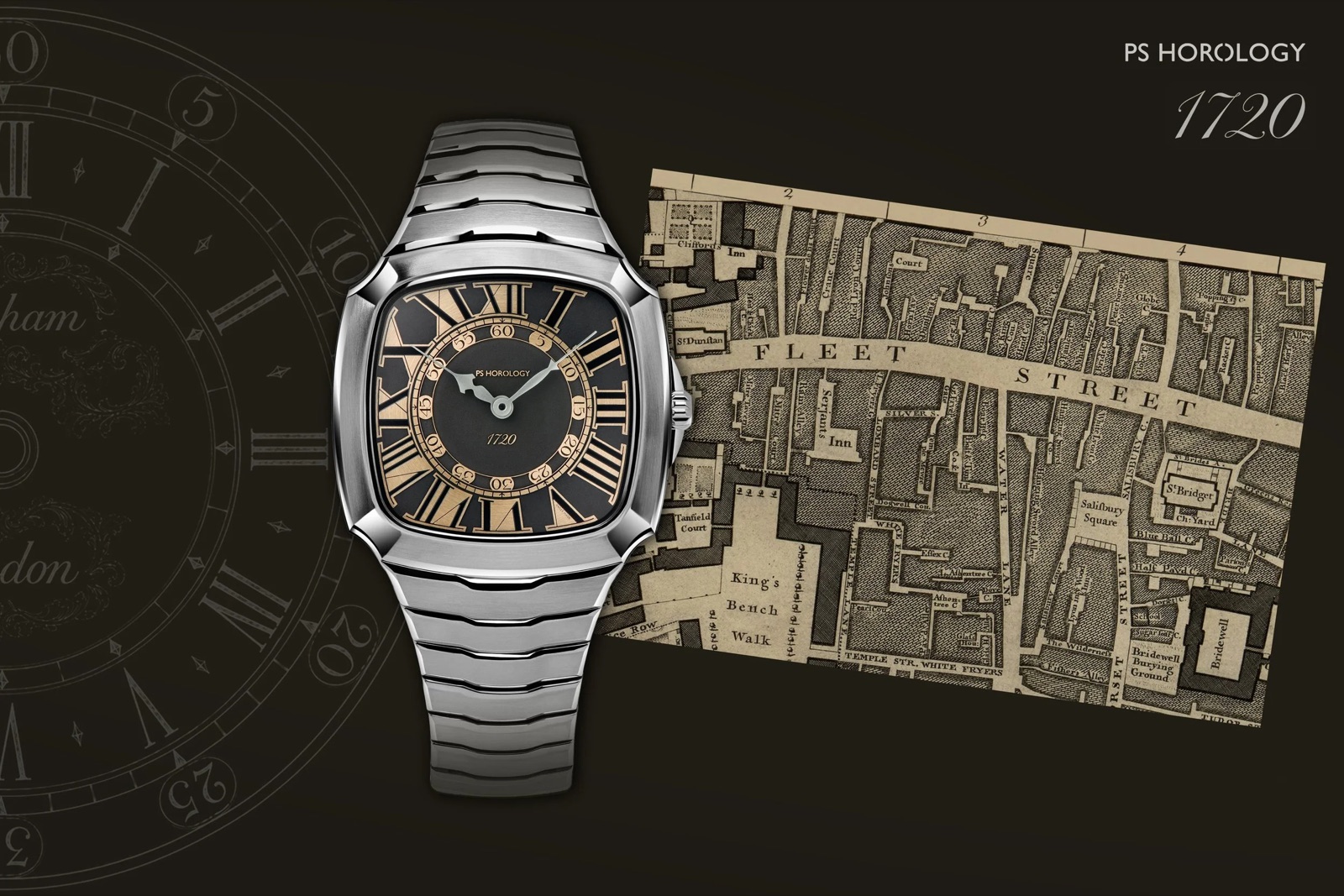
Image: PS Horology 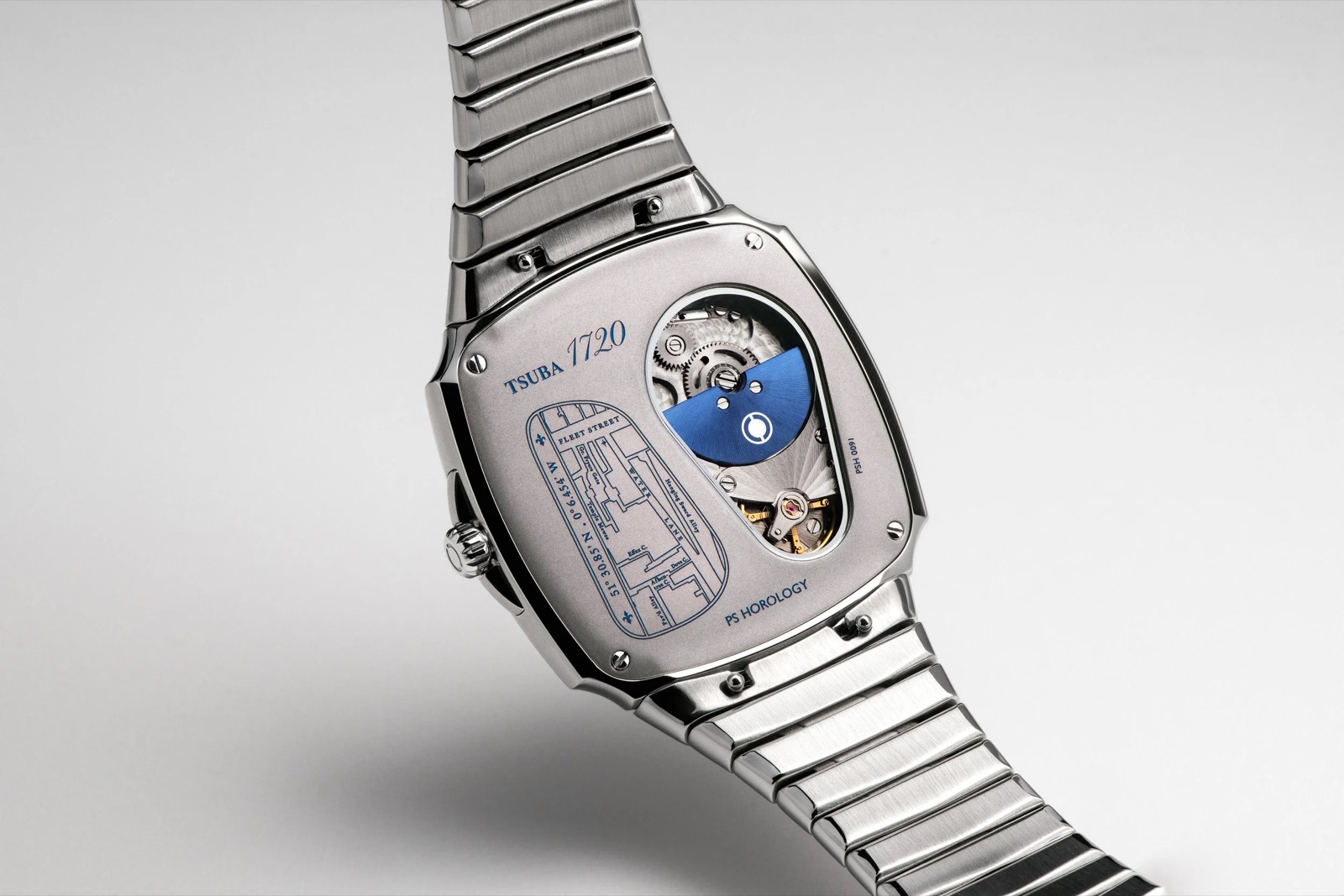
Image: PS Horology 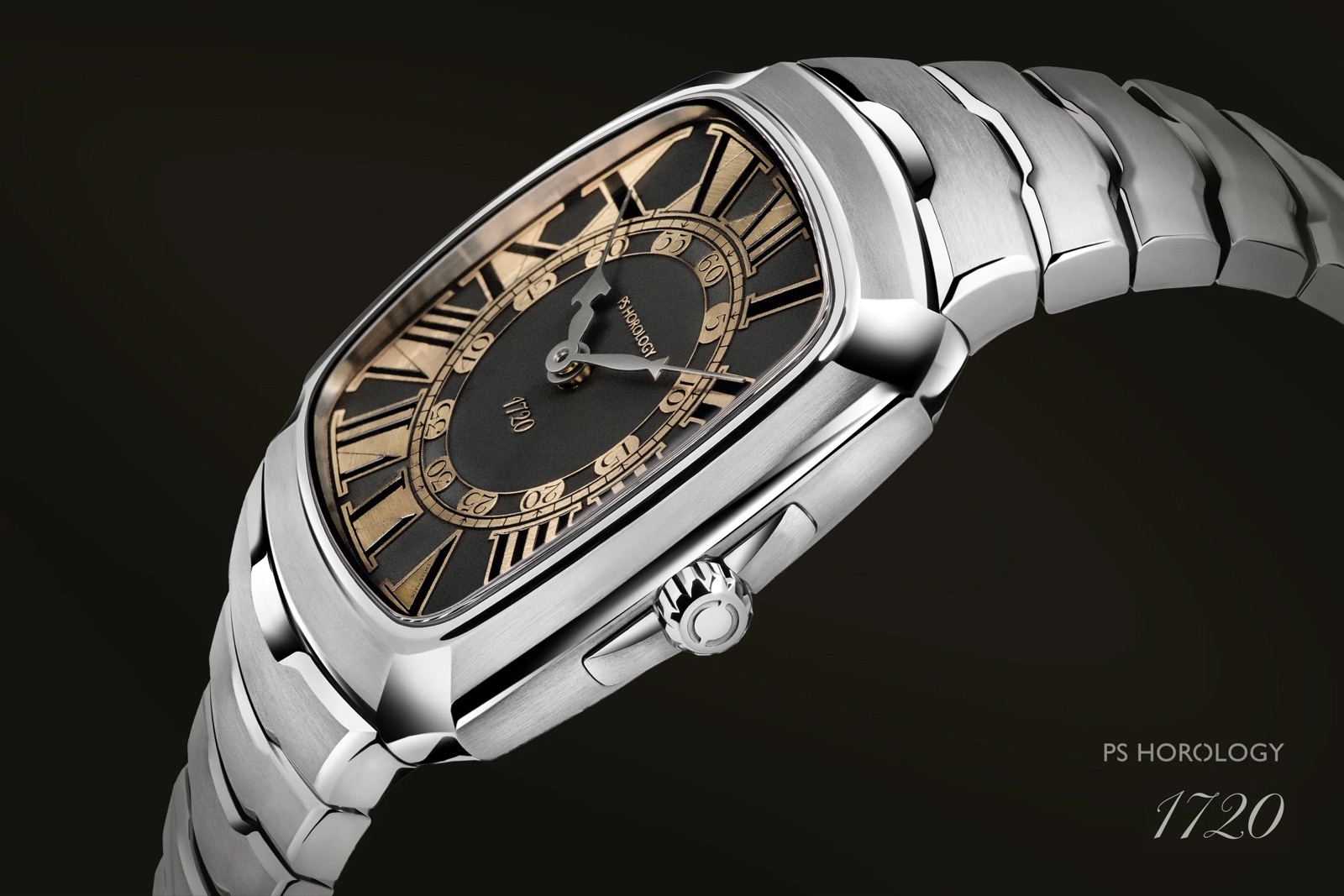
Image: PS Horology


Key specs
| Brand | PS Horology |
|---|---|
| Model | Tsuba 1720 |
| Reference | Unknown |
| Price | Unknown |
| Availability | Reported first deliveries February 2027; maker direct current allocation unverified. |
| Case | 38.3 mm across excluding crown; 8.91 mm thick; 316L steel |
| Movement | Vaucher 5401 automatic micro-rotor; 48-hour reserve; 3 Hz |
| Dial | Hand-finished18k gold; outer hours/inner minutes |
| Bracelet | Steel; articulated first links; butterfly clasp |
| Water resistance | 30 m |
| Edition | 28 pieces |
| Reported price | CHF26,000 before tax/shipping; no verifiedUSD |
Source-based first look; no hands-on testing of this exact release is claimed. Brand relationship not established in the retained source record.
Sources
- PS Horology — exact model source / Tsuba 1720 ps-horology.com
- MONOCHROME / Tsuba 1720 monochrome-watches.com